Buy swimrun.eu ?
We are moving the project
swimrun.eu .
Are you interested in purchasing the domain
swimrun.eu ?
domain@kv-gmbh.de · 0541-91531010
Buy swimrun.eu ?
What is the difference between differential centrifugation and density gradient centrifugation?
Differential centrifugation separates particles based on their size and density by subjecting a sample to multiple rounds of centrifugation at increasing speeds. This method results in the formation of a pellet containing the heaviest particles at each step. Density gradient centrifugation, on the other hand, separates particles based on their buoyant density by layering a sample on top of a density gradient medium and subjecting it to centrifugation. This method results in the formation of distinct bands or layers of particles based on their buoyant density within the gradient medium. Overall, differential centrifugation separates particles based on their size and density, while density gradient centrifugation separates particles based on their buoyant density within a gradient medium. **
How does differential centrifugation work?
Differential centrifugation is a method used to separate different components of a cell or tissue sample based on their size, shape, and density. The sample is first homogenized to break open the cells and release their contents. The homogenate is then subjected to a series of centrifugation steps at increasing speeds, which causes the larger and denser components to sediment out first, followed by the smaller and lighter components. This process results in the separation of organelles and other cellular components into different fractions, which can then be further analyzed or used for various experiments. **


Similar search terms for Centrifugation
Top-Angebote
Products related to Centrifugation:
-
Uplifted Goods Gravity Driven Dual Pet Hydration And Nutrition System 10.63x9.06x10.63 In pinkStreamline your pets daily maintenance with the Gravity Driven Dual Pet Hydration and Nutrition System. This professional grade utility solution is developed with a specialized Integrated Siphon and Hopper Matrix designed to provide a definitive,...59,97 $*Shipping: 0,00 $Secure redirect to the provider
-
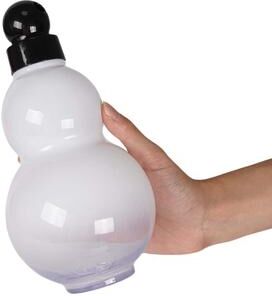
Lush Living Finds Adventure Go Sports Water Bottle With Carry Strap For Hiking, Camping & Daily Hydration whiteStay refreshed wherever life takes you with a bottle designed for people who are always on the move. This 1 pc of hiking water bottle combines a unique gourdshaped design with a generous 950ML capacity, helping you stay hydrated during outdoor...43,97 $*Shipping: 0,00 $Secure redirect to the provider
-
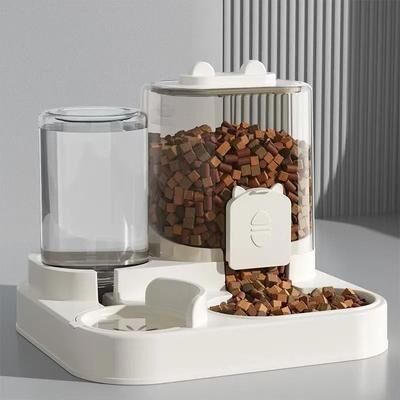
Uplifted Goods Gravity Driven Dual Pet Hydration And Nutrition System 10.63x9.06x10.63 In whiteStreamline your pets daily maintenance with the Gravity Driven Dual Pet Hydration and Nutrition System. This professional grade utility solution is developed with a specialized Integrated Siphon and Hopper Matrix designed to provide a definitive,...59,97 $*Shipping: 0,00 $Secure redirect to the provider
-
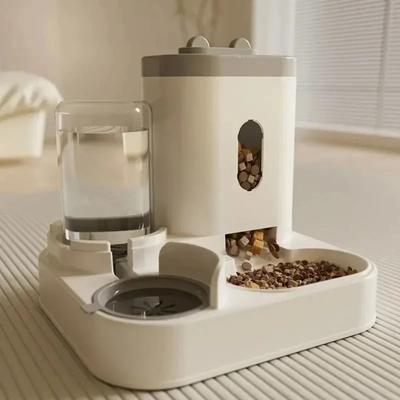
Uplifted Goods Gravity Driven Dual Pet Hydration And Nutrition System 10.63x9.06x10.63 In greyStreamline your pets daily maintenance with the Gravity Driven Dual Pet Hydration and Nutrition System. This professional grade utility solution is developed with a specialized Integrated Siphon and Hopper Matrix designed to provide a definitive,...59,97 $*Shipping: 0,00 $Secure redirect to the provider

-
What is equilibrium density gradient centrifugation?
Equilibrium density gradient centrifugation is a technique used to separate particles or molecules based on their density. In this method, a sample is layered on top of a density gradient medium, such as sucrose or cesium chloride, and then centrifuged at high speeds. As the centrifuge spins, the particles in the sample move through the density gradient until they reach a point where their density matches that of the surrounding medium, resulting in a banding pattern. This allows for the separation and purification of different components based on their density. **
-
What is a simple experiment about centrifugation?
A simple experiment about centrifugation can involve separating a mixture of water and sand. First, mix the water and sand in a test tube. Then, place the test tube in a centrifuge and spin it at a high speed. The centrifugal force will cause the sand particles to settle at the bottom of the test tube, while the water will remain on top. This demonstrates how centrifugation can be used to separate substances of different densities. **
-
How does the separation process of centrifugation work?
Centrifugation works by using centrifugal force to separate substances of different densities in a mixture. When the mixture is spun at high speeds in a centrifuge, the denser components move towards the bottom of the centrifuge tube, while the lighter components move towards the top. This allows for the separation of the different components based on their density. After the spinning is complete, the separated components can be easily collected from their respective positions in the tube. **
-
What is a simple experiment on the topic of centrifugation?
A simple experiment on centrifugation can be done using a mixture of water and sand in a test tube. By spinning the test tube in a centrifuge, the heavier sand particles will settle at the bottom due to centrifugal force, while the lighter water will remain on top. This demonstrates how centrifugation can be used to separate mixtures based on their density. Students can then observe and analyze the separated components to understand the principle of centrifugation. **
Can liquid metals be separated from each other by centrifugation?
Yes, liquid metals can be separated from each other by centrifugation. Centrifugation works by applying centrifugal force to a mixture, causing the components to separate based on their density. Since different metals have different densities, they can be separated from each other using centrifugation. This process is commonly used in metallurgy and metal refining to separate different metals from each other. **
Can someone tell me the steps of cell fractionation by density gradient centrifugation with explanation?
Cell fractionation by density gradient centrifugation involves several steps: 1. Homogenization: The first step is to break open the cells and release their contents. This is typically done using a homogenizer or sonicator to disrupt the cell membranes. 2. Centrifugation: The homogenized cell suspension is then centrifuged at a low speed to remove large debris and unbroken cells. This step separates the homogenate into different fractions based on size and density. 3. Density gradient formation: A density gradient solution, such as sucrose or cesium chloride, is prepared and layered in a centrifuge tube. The gradient is formed by layering solutions of increasing density from the bottom to the top of the tube. 4. Centrifugation: The cell homogenate is then layered on top of the density gradient and centrifuged at high speeds. During centrifugation, the different cellular components separate based on their density and form distinct bands within the gradient. **
Top-Angebote
Products related to Centrifugation:
-
Natura Siberica Nutrition and Hydration Shampoo for Dry Hair 400 mlHealth and Beauty Shampoos Natura Siberica Nutrition and Hydration Shampoo for Dry Hair 400 ml This shampoo, based on organic daurian rose hydrolate, deeply moisturizes hair, lifts it, and leaves it with natural volume. Organic Daurian rose protects hair from moisture loss and gives it radiant shine while gently and long-lastingly protecting and caring for it. Rich in amino acids, wild-harvested Siberian dwarf pine deeply and gently cleanses the scalp, strengthens and repairs damaged hair, and protects it from environmental damage. How to use: Apply the shampoo to damp hair, massage until a lather forms, and rinse thoroughly with warm water. Repeat the process if necessary.7,51 £*Shipping: 3,99 £Secure redirect to the provider
-
Natura Siberica Hair Balm for Dry Hair Nutrition and Hydration 400Health and Beauty Hair conditioners Natura Siberica Hair Balm for Dry Hair Nutrition and Hydration 400 This balm deeply nourishes and protects hair from moisture loss to protect it from environmental damage. This balm, based on organic rose daurica hydrosol, deeply hydrates and lifts hair for natural volume. Organic dauric rose protects hair from moisture loss and gives it a radiant shine while protecting and caring for it delicately and long-lastingly. Rich in amino acids, wild-harvested Siberian Dwarf Pine gently strengthens and repairs damaged hair while protecting it from environmental damage. How to use: Apply the balm to damp hair after shampooing, distributing it evenly over the entire length of the hair. Leave on for 2-3 minutes and rinse.7,43 £*Shipping: 3,99 £Secure redirect to the provider
-
Uplifted Goods Gravity Driven Dual Pet Hydration And Nutrition System 10.63x9.06x10.63 In pinkStreamline your pets daily maintenance with the Gravity Driven Dual Pet Hydration and Nutrition System. This professional grade utility solution is developed with a specialized Integrated Siphon and Hopper Matrix designed to provide a definitive,...59,97 $*Shipping: 0,00 $Secure redirect to the provider
-
Lush Living Finds Adventure Go Sports Water Bottle With Carry Strap For Hiking, Camping & Daily Hydration whiteStay refreshed wherever life takes you with a bottle designed for people who are always on the move. This 1 pc of hiking water bottle combines a unique gourdshaped design with a generous 950ML capacity, helping you stay hydrated during outdoor...43,97 $*Shipping: 0,00 $Secure redirect to the provider
-
What is the difference between differential centrifugation and density gradient centrifugation?
Differential centrifugation separates particles based on their size and density by subjecting a sample to multiple rounds of centrifugation at increasing speeds. This method results in the formation of a pellet containing the heaviest particles at each step. Density gradient centrifugation, on the other hand, separates particles based on their buoyant density by layering a sample on top of a density gradient medium and subjecting it to centrifugation. This method results in the formation of distinct bands or layers of particles based on their buoyant density within the gradient medium. Overall, differential centrifugation separates particles based on their size and density, while density gradient centrifugation separates particles based on their buoyant density within a gradient medium. **
-
How does differential centrifugation work?
Differential centrifugation is a method used to separate different components of a cell or tissue sample based on their size, shape, and density. The sample is first homogenized to break open the cells and release their contents. The homogenate is then subjected to a series of centrifugation steps at increasing speeds, which causes the larger and denser components to sediment out first, followed by the smaller and lighter components. This process results in the separation of organelles and other cellular components into different fractions, which can then be further analyzed or used for various experiments. **
-
What is equilibrium density gradient centrifugation?
Equilibrium density gradient centrifugation is a technique used to separate particles or molecules based on their density. In this method, a sample is layered on top of a density gradient medium, such as sucrose or cesium chloride, and then centrifuged at high speeds. As the centrifuge spins, the particles in the sample move through the density gradient until they reach a point where their density matches that of the surrounding medium, resulting in a banding pattern. This allows for the separation and purification of different components based on their density. **
-
What is a simple experiment about centrifugation?
A simple experiment about centrifugation can involve separating a mixture of water and sand. First, mix the water and sand in a test tube. Then, place the test tube in a centrifuge and spin it at a high speed. The centrifugal force will cause the sand particles to settle at the bottom of the test tube, while the water will remain on top. This demonstrates how centrifugation can be used to separate substances of different densities. **
Similar search terms for Centrifugation
-
Uplifted Goods Gravity Driven Dual Pet Hydration And Nutrition System 10.63x9.06x10.63 In whiteStreamline your pets daily maintenance with the Gravity Driven Dual Pet Hydration and Nutrition System. This professional grade utility solution is developed with a specialized Integrated Siphon and Hopper Matrix designed to provide a definitive,...59,97 $*Shipping: 0,00 $Secure redirect to the provider
-
Uplifted Goods Gravity Driven Dual Pet Hydration And Nutrition System 10.63x9.06x10.63 In greyStreamline your pets daily maintenance with the Gravity Driven Dual Pet Hydration and Nutrition System. This professional grade utility solution is developed with a specialized Integrated Siphon and Hopper Matrix designed to provide a definitive,...59,97 $*Shipping: 0,00 $Secure redirect to the provider
-
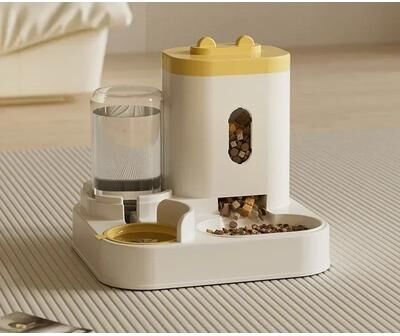
Uplifted Goods Gravity Driven Dual Pet Hydration And Nutrition System 10.63x9.06x10.63 In goldStreamline your pets daily maintenance with the Gravity Driven Dual Pet Hydration and Nutrition System. This professional grade utility solution is developed with a specialized Integrated Siphon and Hopper Matrix designed to provide a definitive,...59,97 $*Shipping: 0,00 $Secure redirect to the provider
-
Uplifted Goods Gravity Driven Dual Pet Hydration And Nutrition System 10.63x9.06x10.63 In blueStreamline your pets daily maintenance with the Gravity Driven Dual Pet Hydration and Nutrition System. This professional grade utility solution is developed with a specialized Integrated Siphon and Hopper Matrix designed to provide a definitive,...59,97 $*Shipping: 0,00 $Secure redirect to the provider
-
How does the separation process of centrifugation work?
Centrifugation works by using centrifugal force to separate substances of different densities in a mixture. When the mixture is spun at high speeds in a centrifuge, the denser components move towards the bottom of the centrifuge tube, while the lighter components move towards the top. This allows for the separation of the different components based on their density. After the spinning is complete, the separated components can be easily collected from their respective positions in the tube. **
-
What is a simple experiment on the topic of centrifugation?
A simple experiment on centrifugation can be done using a mixture of water and sand in a test tube. By spinning the test tube in a centrifuge, the heavier sand particles will settle at the bottom due to centrifugal force, while the lighter water will remain on top. This demonstrates how centrifugation can be used to separate mixtures based on their density. Students can then observe and analyze the separated components to understand the principle of centrifugation. **
-
Can liquid metals be separated from each other by centrifugation?
Yes, liquid metals can be separated from each other by centrifugation. Centrifugation works by applying centrifugal force to a mixture, causing the components to separate based on their density. Since different metals have different densities, they can be separated from each other using centrifugation. This process is commonly used in metallurgy and metal refining to separate different metals from each other. **
-
Can someone tell me the steps of cell fractionation by density gradient centrifugation with explanation?
Cell fractionation by density gradient centrifugation involves several steps: 1. Homogenization: The first step is to break open the cells and release their contents. This is typically done using a homogenizer or sonicator to disrupt the cell membranes. 2. Centrifugation: The homogenized cell suspension is then centrifuged at a low speed to remove large debris and unbroken cells. This step separates the homogenate into different fractions based on size and density. 3. Density gradient formation: A density gradient solution, such as sucrose or cesium chloride, is prepared and layered in a centrifuge tube. The gradient is formed by layering solutions of increasing density from the bottom to the top of the tube. 4. Centrifugation: The cell homogenate is then layered on top of the density gradient and centrifuged at high speeds. During centrifugation, the different cellular components separate based on their density and form distinct bands within the gradient. **
* All prices are inclusive of VAT and, if applicable, plus shipping costs. The offer information is based on the details provided by the respective shop and is updated through automated processes. Real-time updates do not occur, so deviations can occur in individual cases. ** Note: Parts of this content were created by AI.