Buy swimrun.eu ?
We are moving the project
swimrun.eu .
Are you interested in purchasing the domain
swimrun.eu ?
domain@kv-gmbh.de · 0541-91531010
Buy swimrun.eu ?
When are ligands neutrally charged?
Ligands are neutrally charged when they have an equal number of positive and negative charges. This can occur when the ligand has a net charge of zero, such as in the case of water (H2O) or ammonia (NH3). Additionally, ligands can also be neutrally charged when they form coordinate covalent bonds with a metal ion, resulting in a neutral overall charge for the complex. **
What is the toughness of ligands?
The toughness of ligands refers to their ability to form stable coordination complexes with metal ions. Ligands with high toughness have strong bonds with the metal ion, making them less likely to dissociate from the complex. This property is important in determining the stability and reactivity of coordination complexes. Tough ligands are often used in catalysis and other applications where the complex needs to remain intact under harsh conditions. **

Similar search terms for Ligands
Top-Angebote
Products related to Ligands:
-
Uplifted Goods Gravity Driven Dual Pet Hydration And Nutrition System 10.63x9.06x10.63 In goldStreamline your pets daily maintenance with the Gravity Driven Dual Pet Hydration and Nutrition System. This professional grade utility solution is developed with a specialized Integrated Siphon and Hopper Matrix designed to provide a definitive,...59,97 $*Shipping: 0,00 $Secure redirect to the provider
-
Nourish Books Training Food by Renee McGregor - Sports Nutrition Recipe Book - Paperback - Fuel Your Training Before, During & After ExerciseTraining Food: Get the Fuel You Need to Achieve Your Goals is a practical sports nutrition guide from registered dietitian and sports nutritionist Renee McGregor. Written for runners, cyclists, triathletes, swimmers, and team-sport players of every level, it combines accessible science with real, everyday recipes so athletes can fuel training, protect against injury, and recover properly without giving up on taste, variety, or a normal social life around food. The book is split into two clear parts. Part One breaks down the science of sports nutrition in plain English, covering fuelling basics, how training itself demands different nutritional strategies, how needs vary by sport, and how to troubleshoot common issues such as runner's knee or tennis elbow through diet. Part Two turns that science into action with a full set of recipes to help athletes achieve their goals.8,49 £*Shipping: 2,99 £Secure redirect to the provider
-
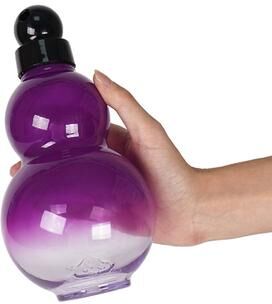
Lush Living Finds Adventure Go Sports Water Bottle With Carry Strap For Hiking, Camping & Daily Hydration purpleStay refreshed wherever life takes you with a bottle designed for people who are always on the move. This 1 pc of hiking water bottle combines a unique gourdshaped design with a generous 950ML capacity, helping you stay hydrated during outdoor...43,97 $*Shipping: 0,00 $Secure redirect to the provider
-
Uplifted Goods Gravity Driven Dual Pet Hydration And Nutrition System 10.63x9.06x10.63 In whiteStreamline your pets daily maintenance with the Gravity Driven Dual Pet Hydration and Nutrition System. This professional grade utility solution is developed with a specialized Integrated Siphon and Hopper Matrix designed to provide a definitive,...59,97 $*Shipping: 0,00 $Secure redirect to the provider



-
What is the chelating ability of ligands?
The chelating ability of ligands refers to their ability to form coordination complexes by binding to a central metal ion through multiple donor atoms. Ligands with chelating ability can form more stable complexes compared to monodentate ligands because they can wrap around the metal ion, forming a ring-like structure known as a chelate. This chelate structure enhances the stability of the complex by reducing the chances of other molecules displacing the ligand from the metal ion. Chelating ligands are commonly used in various fields such as medicine, environmental science, and industrial chemistry due to their ability to form stable and selective complexes with metal ions. **
-
What is the structural formula of ligands?
The structural formula of ligands can vary depending on the specific ligand, but in general, ligands are molecules or ions that have one or more lone pairs of electrons that can be donated to a metal ion. The structural formula typically includes the arrangement of atoms and lone pairs of electrons that are available for coordination to the metal ion. Ligands can be classified as monodentate, bidentate, tridentate, etc., depending on the number of donor atoms they have available for coordination. Overall, the structural formula of ligands reflects their ability to form coordination complexes with metal ions. **
-
How can one determine the toughness of ligands?
The toughness of ligands can be determined by their ability to form stable complexes with metal ions. Ligands with multiple donor atoms and strong donor atoms, such as nitrogen, oxygen, and sulfur, are generally tougher than ligands with fewer or weaker donor atoms. Additionally, the size and charge of the ligand can also affect its toughness, with larger and negatively charged ligands typically being tougher. Experimentally, the toughness of ligands can be determined by measuring the stability constants of the metal-ligand complexes they form. **
-
What is the number of ligands in coordination chemistry?
The number of ligands in coordination chemistry refers to the number of donor atoms in a molecule or ion that can bond to a central metal atom. The number of ligands can vary depending on the coordination number of the central metal atom. Common coordination numbers include 2, 4, 6, and 8, which correspond to complexes with 2, 4, 6, or 8 ligands, respectively. The coordination number and the number of ligands determine the geometry and overall structure of the coordination complex. **


What is the number of ligands in complex chemistry?
The number of ligands in complex chemistry refers to the number of molecules or ions that are bonded to a central metal atom. The number of ligands can vary depending on the coordination number of the metal atom, which is the total number of bonds formed with the ligands. Common coordination numbers include 2, 4, 6, and so on, which correspond to the number of ligands bonded to the central metal atom. The coordination number and the number of ligands play a crucial role in determining the geometry and properties of coordination complexes. **
Which factors influence the exchange rate of ligands in the complex?
The exchange rate of ligands in a complex is influenced by several factors. One key factor is the strength of the bond between the ligand and the central metal ion. Stronger bonds typically result in slower exchange rates. Additionally, the steric hindrance around the metal center can affect the exchange rate, with bulky ligands hindering the exchange process. The nature of the solvent and the temperature of the system can also impact the exchange rate of ligands in a complex. **
Top-Angebote
Products related to Ligands:
-
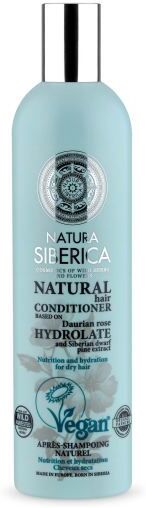
Natura Siberica Nutrition and Hydration Shampoo for Dry Hair 400 mlHealth and Beauty Shampoos Natura Siberica Nutrition and Hydration Shampoo for Dry Hair 400 ml This shampoo, based on organic daurian rose hydrolate, deeply moisturizes hair, lifts it, and leaves it with natural volume. Organic Daurian rose protects hair from moisture loss and gives it radiant shine while gently and long-lastingly protecting and caring for it. Rich in amino acids, wild-harvested Siberian dwarf pine deeply and gently cleanses the scalp, strengthens and repairs damaged hair, and protects it from environmental damage. How to use: Apply the shampoo to damp hair, massage until a lather forms, and rinse thoroughly with warm water. Repeat the process if necessary.7,43 £*Shipping: 3,99 £Secure redirect to the provider
-
Natura Siberica Hair Balm for Dry Hair Nutrition and Hydration 400Health and Beauty Hair conditioners Natura Siberica Hair Balm for Dry Hair Nutrition and Hydration 400 This balm deeply nourishes and protects hair from moisture loss to protect it from environmental damage. This balm, based on organic rose daurica hydrosol, deeply hydrates and lifts hair for natural volume. Organic dauric rose protects hair from moisture loss and gives it a radiant shine while protecting and caring for it delicately and long-lastingly. Rich in amino acids, wild-harvested Siberian Dwarf Pine gently strengthens and repairs damaged hair while protecting it from environmental damage. How to use: Apply the balm to damp hair after shampooing, distributing it evenly over the entire length of the hair. Leave on for 2-3 minutes and rinse.7,41 £*Shipping: 3,99 £Secure redirect to the provider
-
Uplifted Goods Gravity Driven Dual Pet Hydration And Nutrition System 10.63x9.06x10.63 In goldStreamline your pets daily maintenance with the Gravity Driven Dual Pet Hydration and Nutrition System. This professional grade utility solution is developed with a specialized Integrated Siphon and Hopper Matrix designed to provide a definitive,...59,97 $*Shipping: 0,00 $Secure redirect to the provider
-
Nourish Books Training Food by Renee McGregor - Sports Nutrition Recipe Book - Paperback - Fuel Your Training Before, During & After ExerciseTraining Food: Get the Fuel You Need to Achieve Your Goals is a practical sports nutrition guide from registered dietitian and sports nutritionist Renee McGregor. Written for runners, cyclists, triathletes, swimmers, and team-sport players of every level, it combines accessible science with real, everyday recipes so athletes can fuel training, protect against injury, and recover properly without giving up on taste, variety, or a normal social life around food. The book is split into two clear parts. Part One breaks down the science of sports nutrition in plain English, covering fuelling basics, how training itself demands different nutritional strategies, how needs vary by sport, and how to troubleshoot common issues such as runner's knee or tennis elbow through diet. Part Two turns that science into action with a full set of recipes to help athletes achieve their goals.8,49 £*Shipping: 2,99 £Secure redirect to the provider
-
When are ligands neutrally charged?
Ligands are neutrally charged when they have an equal number of positive and negative charges. This can occur when the ligand has a net charge of zero, such as in the case of water (H2O) or ammonia (NH3). Additionally, ligands can also be neutrally charged when they form coordinate covalent bonds with a metal ion, resulting in a neutral overall charge for the complex. **
-
What is the toughness of ligands?
The toughness of ligands refers to their ability to form stable coordination complexes with metal ions. Ligands with high toughness have strong bonds with the metal ion, making them less likely to dissociate from the complex. This property is important in determining the stability and reactivity of coordination complexes. Tough ligands are often used in catalysis and other applications where the complex needs to remain intact under harsh conditions. **
-
What is the chelating ability of ligands?
The chelating ability of ligands refers to their ability to form coordination complexes by binding to a central metal ion through multiple donor atoms. Ligands with chelating ability can form more stable complexes compared to monodentate ligands because they can wrap around the metal ion, forming a ring-like structure known as a chelate. This chelate structure enhances the stability of the complex by reducing the chances of other molecules displacing the ligand from the metal ion. Chelating ligands are commonly used in various fields such as medicine, environmental science, and industrial chemistry due to their ability to form stable and selective complexes with metal ions. **
-
What is the structural formula of ligands?
The structural formula of ligands can vary depending on the specific ligand, but in general, ligands are molecules or ions that have one or more lone pairs of electrons that can be donated to a metal ion. The structural formula typically includes the arrangement of atoms and lone pairs of electrons that are available for coordination to the metal ion. Ligands can be classified as monodentate, bidentate, tridentate, etc., depending on the number of donor atoms they have available for coordination. Overall, the structural formula of ligands reflects their ability to form coordination complexes with metal ions. **
Similar search terms for Ligands
-
Lush Living Finds Adventure Go Sports Water Bottle With Carry Strap For Hiking, Camping & Daily Hydration purpleStay refreshed wherever life takes you with a bottle designed for people who are always on the move. This 1 pc of hiking water bottle combines a unique gourdshaped design with a generous 950ML capacity, helping you stay hydrated during outdoor...43,97 $*Shipping: 0,00 $Secure redirect to the provider
-
Uplifted Goods Gravity Driven Dual Pet Hydration And Nutrition System 10.63x9.06x10.63 In whiteStreamline your pets daily maintenance with the Gravity Driven Dual Pet Hydration and Nutrition System. This professional grade utility solution is developed with a specialized Integrated Siphon and Hopper Matrix designed to provide a definitive,...59,97 $*Shipping: 0,00 $Secure redirect to the provider
-
Uplifted Goods Gravity Driven Dual Pet Hydration And Nutrition System 10.63x9.06x10.63 In pinkStreamline your pets daily maintenance with the Gravity Driven Dual Pet Hydration and Nutrition System. This professional grade utility solution is developed with a specialized Integrated Siphon and Hopper Matrix designed to provide a definitive,...59,97 $*Shipping: 0,00 $Secure redirect to the provider
-
Uplifted Goods Gravity Driven Dual Pet Hydration And Nutrition System 10.63x9.06x10.63 In blueStreamline your pets daily maintenance with the Gravity Driven Dual Pet Hydration and Nutrition System. This professional grade utility solution is developed with a specialized Integrated Siphon and Hopper Matrix designed to provide a definitive,...59,97 $*Shipping: 0,00 $Secure redirect to the provider
-
How can one determine the toughness of ligands?
The toughness of ligands can be determined by their ability to form stable complexes with metal ions. Ligands with multiple donor atoms and strong donor atoms, such as nitrogen, oxygen, and sulfur, are generally tougher than ligands with fewer or weaker donor atoms. Additionally, the size and charge of the ligand can also affect its toughness, with larger and negatively charged ligands typically being tougher. Experimentally, the toughness of ligands can be determined by measuring the stability constants of the metal-ligand complexes they form. **
-
What is the number of ligands in coordination chemistry?
The number of ligands in coordination chemistry refers to the number of donor atoms in a molecule or ion that can bond to a central metal atom. The number of ligands can vary depending on the coordination number of the central metal atom. Common coordination numbers include 2, 4, 6, and 8, which correspond to complexes with 2, 4, 6, or 8 ligands, respectively. The coordination number and the number of ligands determine the geometry and overall structure of the coordination complex. **
-
What is the number of ligands in complex chemistry?
The number of ligands in complex chemistry refers to the number of molecules or ions that are bonded to a central metal atom. The number of ligands can vary depending on the coordination number of the metal atom, which is the total number of bonds formed with the ligands. Common coordination numbers include 2, 4, 6, and so on, which correspond to the number of ligands bonded to the central metal atom. The coordination number and the number of ligands play a crucial role in determining the geometry and properties of coordination complexes. **
-
Which factors influence the exchange rate of ligands in the complex?
The exchange rate of ligands in a complex is influenced by several factors. One key factor is the strength of the bond between the ligand and the central metal ion. Stronger bonds typically result in slower exchange rates. Additionally, the steric hindrance around the metal center can affect the exchange rate, with bulky ligands hindering the exchange process. The nature of the solvent and the temperature of the system can also impact the exchange rate of ligands in a complex. **
* All prices are inclusive of VAT and, if applicable, plus shipping costs. The offer information is based on the details provided by the respective shop and is updated through automated processes. Real-time updates do not occur, so deviations can occur in individual cases. ** Note: Parts of this content were created by AI.